Built for real Texas backyards, not textbook ideals.
National gardening books were written for the Midwest or Pacific Northwest. When Texas summer hits 104°F, black gumbo clay bakes like concrete, and water restrictions kick in, traditional advice fails. We built My Micro Farm Texas to give Lone Star homeowners a battle-tested, climate-specific blueprint.
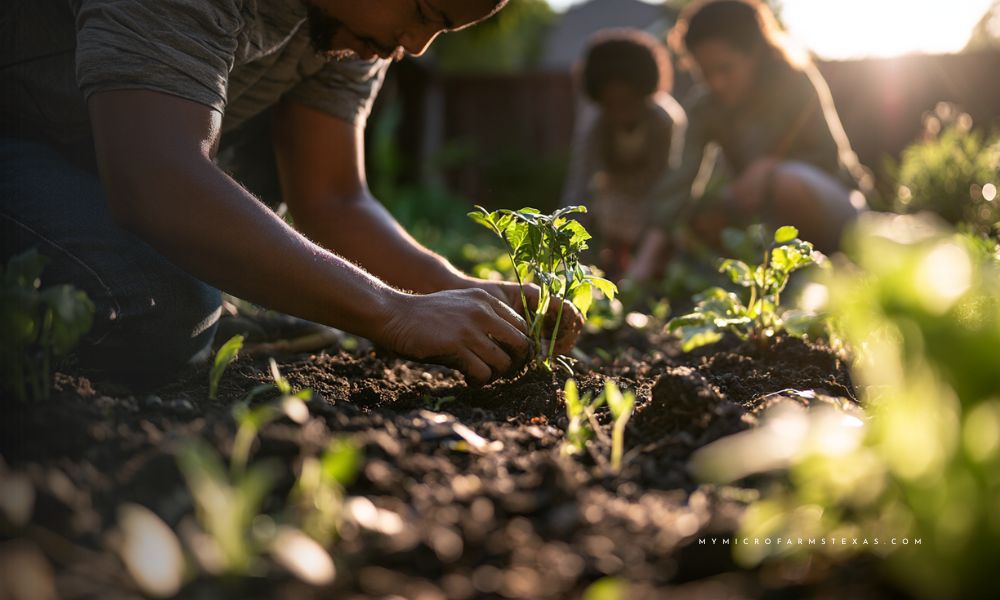
Gardening in Texas is different. Here’s why.
Too many Texas homeowners give up after their first summer. They spend hundreds at big-box garden centers, plant by northern seed packet dates, and watch tender tomatoes drop blossoms by June while the soil turns to brick.
We believe backyard food production in Texas shouldn’t be a gamble. Texas is one of the most productive growing states in the country if you understand the rules: working with two distinct growing seasons, building living raised-bed soil that resists caliche and heavy clay, and deploying efficient drip irrigation.
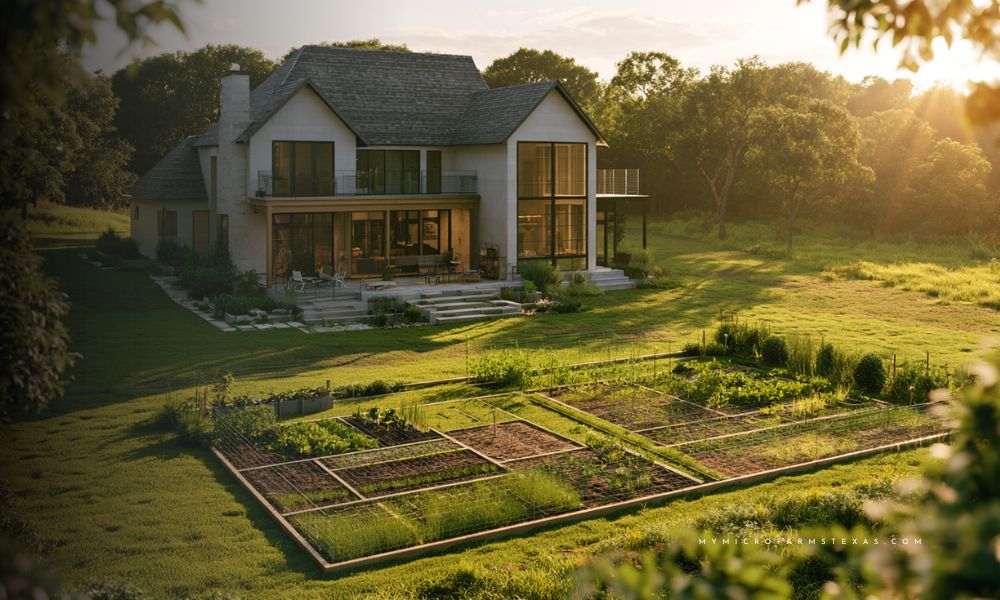
From quarter-acre suburban lots with HOA guidelines to open multi-acre country acreage, our mission is to empower Texas families with practical systems that produce fresh, nutrient-dense food year after year.
The three pillars of resilient Texas micro-farming
Every guide, worksheet, and planting calendar we publish is built on these principles.
The Double Season Strategy
July and August are not planting months in Texas—they are maintenance and survival windows. The secret is seizing early Spring (February–May) and mastering the Fall garden (August–December), which is often the most rewarding season for Texas gardeners.
Engineered Raised Beds & Mulch
Whether you battle alkaline caliche in Central Texas or heavy Blackland Prairie clay in North Texas, our methods emphasize elevated root zones, organic compost layering, and automated drip irrigation that reduces water bills by up to 60%.
Backyard Property Rights
You shouldn’t have to fight your HOA to grow food. We demystify Texas Senate Bill and local municipal ordinances, showing homeowners how to integrate attractive, compliant food gardens and micro-enterprises right into their backyards.
Ready to build your Texas micro-farm?
Get the complete 57-page Texas Micro-Farms Blueprint PDF. Includes regional planting calendars, soil recipes, HOA worksheets, and step-by-step layout guides for your yard.