Drought-Proofing Your Texas Micro-Farm: Rainwater Math, Drip Schedules, and Tax Code §151.355
How can a Texas backyard garden use less municipal water?
Combine roof-catchment estimates with realistic garden demand, then deliver water at the root zone through drip irrigation and mulch. Tank size alone does not guarantee supply during a long dry period.
In Texas, water is not just a gardening input—it is the ultimate limiting factor. When municipal water districts trigger Stage 2 or Stage 3 drought restrictions, overhead sprinkler watering is immediately banned, and municipal water rates spike through tier-pricing penalties.
If your backyard micro-farm relies entirely on hand-watering with a hose or municipal sprayers, you are one dry spell away from an astronomical utility bill or a garden disaster.
- Overhead spraying loses up to 45% of applied water to evaporation before it ever touches plant roots in Texas summer.
- Texas Tax Code §151.355 exempts all rainwater harvesting and water-saving irrigation equipment from 100% of state and local sales tax.
- A standard 2,000 sq ft home roof catches 1,200 gallons of clean water from just a single one-inch Texas rainstorm.
- Drip irrigation operated between 5:00 AM and 7:00 AM keeps plants fully turgid without promoting fungal disease.
The Rainwater Harvest Formula: How Much Can You Catch?
Texas rainfall tends to arrive in violent, concentrated deluges. Sizing a storage cistern allows you to capture thousands of gallons in an afternoon and meter it out over six weeks of drought.
Use this standard engineering formula to estimate your potential harvest:
Example: A modest 1,500 sq ft roof catching a 2-inch central Texas thunderstorm produces over 1,680 gallons of pure, chlorine-free water. That is enough to sustain four 4×8-foot raised vegetable beds for an entire month.
The Hidden Goldmine: Texas Tax Code §151.355
Few homeowners realize that the State of Texas actively incentivizes water conservation through the tax code. Under Texas Tax Code §151.355, all equipment purchased for rainwater harvesting and water-conserving irrigation systems is 100% exempt from Texas sales and use tax.
This includes:
- Polyethylene cisterns and storage tanks
- Gutters, downspouts, first-flush diverters, and leaf screens
- 12V and solar water transfer pumps
- Drip irrigation tubing, pressure regulators, filters, and automated timers
To claim this exemption, you simply present Texas Comptroller Form 01-339 (Texas Sales and Use Tax Exemption Certificate) to your supplier at checkout, noting Section 151.355. This instantly saves you 8.25% on major infrastructure investments.
Automating Drip Irrigation in Triple-Digit Heat
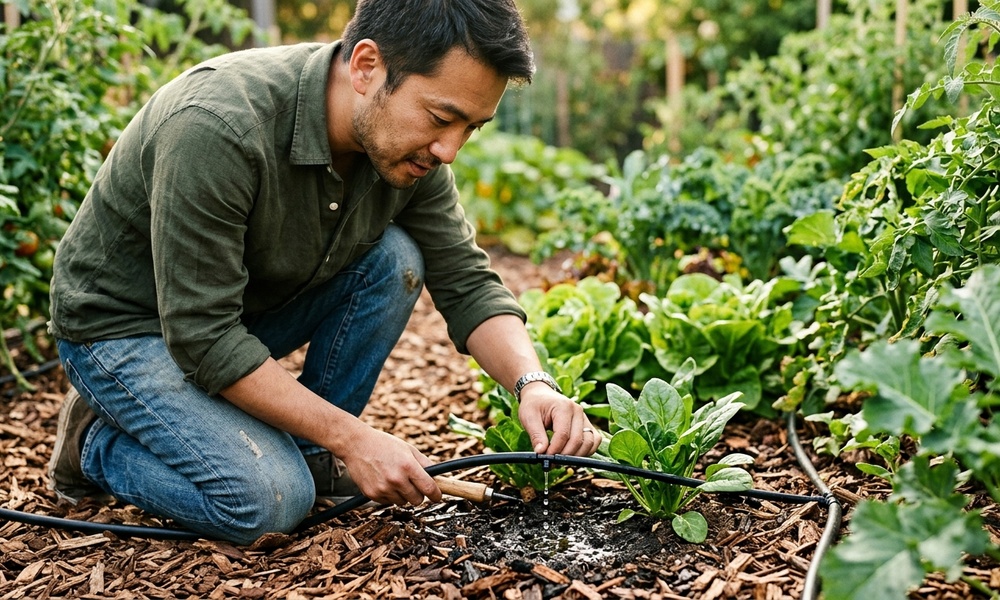
Stop overhead watering. Foliage that stays wet overnight in high humidity invites powdery mildew and early blight. Instead, install 1/2-inch mainline poly tubing branching into 1/4-inch emitter lines with 0.5 GPH (gallon per hour) emitters spaced every 12 inches under your mulch layer.
During 100°F days, run your system at 5:00 AM for 30–45 minutes every 2 to 3 days, soaking down 6 to 8 inches into the root zone. Deep, infrequent watering forces roots downward into cool subsoil rather than keeping them shallow and vulnerable at the surface.
Plan with reliable local information
Pair this overview with our Why Texas Gardens Die in July: The Secret of the Two-Season Growing System and Can Your Texas HOA Ban Your Backyard Garden or Rain Barrels? Know Your Legal Rights.
Turn the advice into a workable backyard plan.
The 57-page Texas Micro-Farms Blueprint brings the planting calendars, yard assessment, soil and water planning, and printable worksheets together in one place.
Pingback: 10 Heat-Resistant Vegetables That Thrive in 100°F Texas Summers - My Micro Farm Texas
Pingback: The First 4 Questions to Ask Before Building a Texas Raised Bed - My Micro Farm Texas