Blackland Clay, Caliche, or Sand? The Universal Texas Raised Bed Soil Recipe
What soil should go into a Texas raised bed?
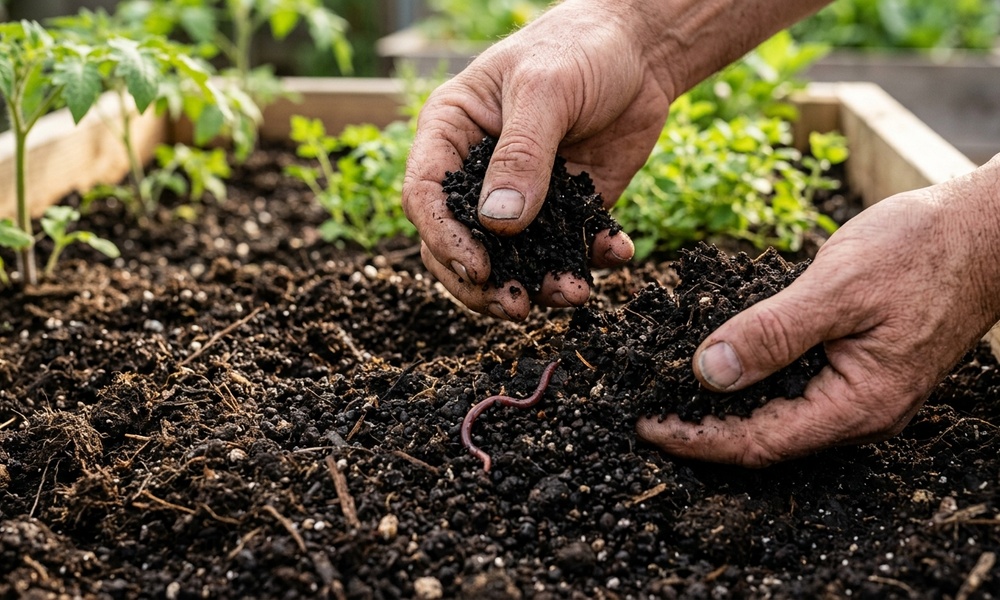
Start with a tested, well-drained growing mix that balances mineral soil, mature compost, and aeration. The right proportions depend on the materials you can source and the drainage problems at your site.
Ask three Texas backyard growers what their native soil looks like, and you’ll hear three completely different tales of misery.
In the Dallas-Fort Worth metroplex and Central Blackland Prairie, you’ll encounter heavy “black gumbo” shrink-swell clay that expands like greasy putty when wet and cracks wide enough to swallow a smartphone when dry. Travel into Austin and the Texas Hill Country, and your shovel clanks against solid white limestone caliche three inches below the turf. Head east into the Piney Woods, and you get acidic, nutrient-leached sand that cannot hold moisture.
Trying to plant high-yielding vegetables directly into native Texas soil without extensive remediation is the number-one reason beginner gardeners burn out. That is why engineered raised beds are the foundation of productive Texas micro-farming.
- Native Texas soils (Blackland clay and caliche) suffer from extreme drainage or compaction issues that choke vegetable roots.
- Expanded shale is the secret mineral weapon for aeration and water retention in heavy Texas soils.
- A 12 to 18-inch raised bed insulates root zones from soil temperature extremes.
- A 3-inch layer of hardwood or shredded cedar mulch drops soil temperatures by up to 15°F during 100°F days.
Why Native Texas Dirt Fights You
The problem isn’t that Texas soil lacks minerals—in fact, Blackland clay is packed with potassium and calcium. The problem is physical soil structure:
- Shrink-Swell Clay: Microscopic clay platelets compress tightly together, depriving root hairs of essential oxygen. In spring rains, it waterlogs roots; in summer heat, it shrinks and tears delicate feeder roots apart.
- Caliche Hardpan: Highly alkaline (pH 7.8 to 8.4) calcium carbonate that locks up iron and phosphorus, causing widespread leaf yellowing (chlorosis).
The Universal Texas Raised Bed Soil Formula
To avoid spending hundreds of dollars on bagged potting soil that breaks down into hydrophobic dust in July, mix your own bulk raised-bed blend using this proven regional ratio:
The 40-30-20-10 Lone Star Blend
- 40% Clean Organic Compost: Decomposed local dairy manure, fungal-rich leaf mold, or screened yard compost to establish living microbial biology.
- 30% Aged Pine Bark Fines or Coconut Coir: Provides structural moisture retention without compacting under torrential thunderstorm downpours.
- 20% Expanded Shale: Fired clay aggregate that creates permanent air pockets and holds internal water reservoirs that plant roots can tap during dry spells.
- 10% Native Topsoil (Screened): Inoculates the bed with local beneficial mycorrhizae and trace native minerals.
Mulch: The Non-Negotiable Heat Shield
Bare soil in a Texas garden is an emergency. When the ambient temperature hits 102°F, bare dark soil surfaces can reach an astonishing 140°F—hot enough to kill all beneficial earthworms and nitrifying bacteria within hours.
Always maintain a minimum of 2 to 3 inches of coarse organic mulch (such as native shredded cedar, pine straw, or clean hardwood) across every square inch of your beds. Mulch reduces soil evaporation by up to 70% and keeps the sub-surface root zone at a comfortable 85°F.
Plan with reliable local information
Pair this overview with our The First 4 Questions to Ask Before Building a Texas Raised Bed and Drought-Proofing Your Texas Micro-Farm: Rainwater Math, Drip Schedules, and Tax Code §151.355.
Turn the advice into a workable backyard plan.
The 57-page Texas Micro-Farms Blueprint brings the planting calendars, yard assessment, soil and water planning, and printable worksheets together in one place.